
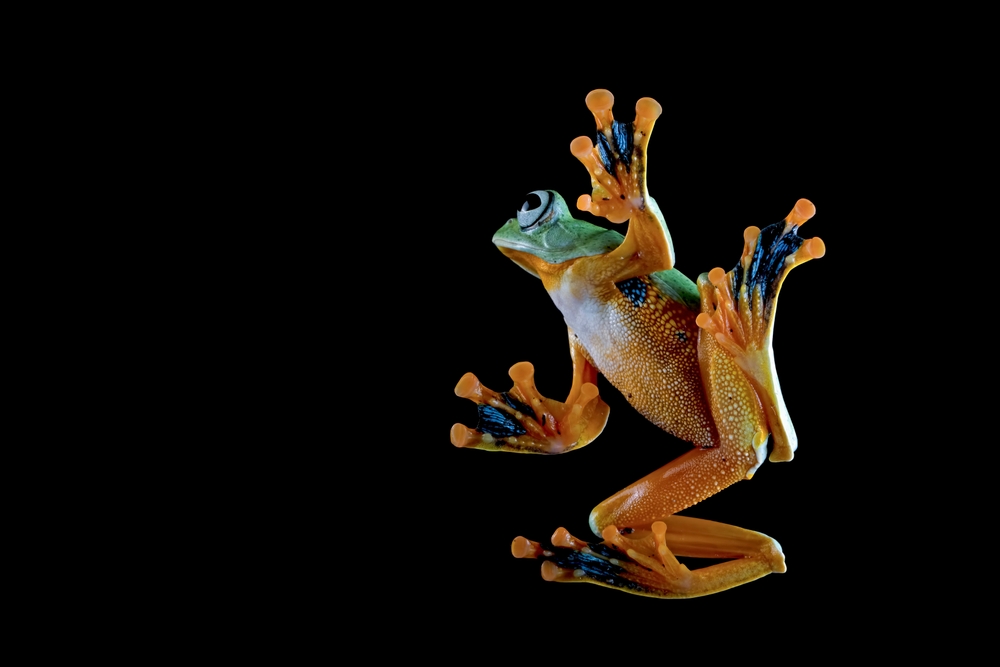
Rhacophorus nigropalmatus
Animal group: Amphibian
Family: Rhacophoridae
Length: Up to 10 cm
Diet: Insects and other small invertebrates
Habitat: Tropical rainforest
Distribution: Southeast Asia, including Borneo, Sumatra and the Malay Peninsula
Conservation status: Least Concern
Built for Gliding
Wallace’s flying frog cannot truly fly. Instead, it leaps from high branches and spreads its enormous webbed feet to catch the air. Flaps of skin along its legs also help it glide safely towards another tree or the forest floor. Large, sticky toe pads allow the frog to grip branches and tree trunks when it lands.
Life in the Rainforest
This bright green frog spends most of its life in the trees. Its colour helps it disappear among rainforest leaves, while the bold black and yellow webbing between its toes is normally hidden until it jumps.
Females create foamy nests on vegetation hanging over pools of water. When the eggs hatch, the tadpoles drop into the water below, where they continue developing into frogs.
Did You Know?
Wallace’s flying frog is named after British naturalist Alfred Russel Wallace. Despite being classified as Least Concern, the species is affected by the loss and degradation of its rainforest habitat. AmphibiaWeb, IUCN Red List