
Hellbender (Cryptobranchus alleganiensis)
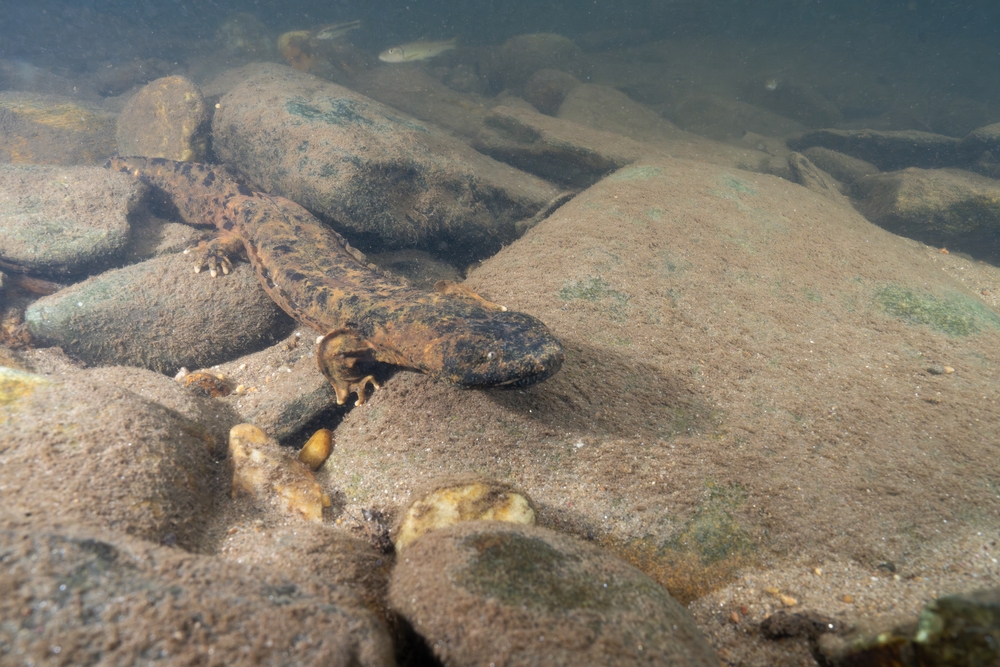
Animal group: Amphibian
Family: Cryptobranchidae
Length: Up to approximately 74 cm
Diet: Crayfish, small fish, insects and other aquatic animals
Habitat: Cool, clean and fast-flowing rocky streams
Distribution: Eastern and central United States
Conservation status: Vulnerable
North America’s Giant Salamander
The hellbender is the largest salamander in North America. Its wide head, flattened body and powerful tail help it move through fast-flowing water. During the day, it usually hides beneath large rocks before emerging to hunt at night.
Despite its alarming name and unusual appearance, the hellbender is harmless to people.
Breathing Through Wrinkles
Adult hellbenders have lungs, but they absorb most of their oxygen directly from the water through their skin. The loose folds running along their sides provide a larger surface through which oxygen can pass. This unusual method of breathing means hellbenders need clean, cool and well-oxygenated water.
Devoted Dads
During the breeding season, a male prepares a nest beneath a large rock. After a female lays a long string of eggs inside, the male fertilises them and guards the nest until they hatch. He uses his body and tail to circulate fresh water around the developing eggs.
Did You Know?
Hellbenders have several amusing nicknames, including “snot otter” and “lasagne lizard.” Finding one in a stream can be a sign that the water is clean and healthy. Unfortunately, pollution, dams and sediment covering their rocky shelters have caused many populations to disappear. AmphibiaWeb, U.S. Fish and Wildlife Service