
When you imagine a baby salamander, you might picture a tiny copy of its parents. Sometimes that is exactly what hatches—but salamanders have evolved an astonishing variety of ways to begin their lives.
Some hatch as water-dwelling larvae with feathery gills. Others develop completely inside their eggs and emerge as miniature adults. A few salamanders even give birth to live young!
First Comes the Courtship
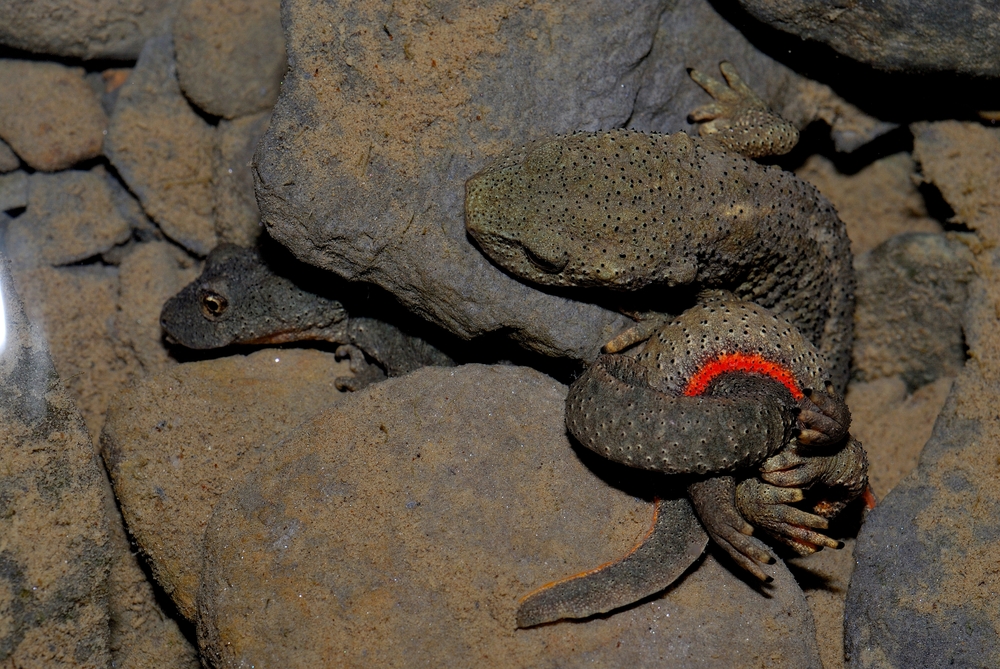
Salamanders do not usually attract partners with loud calls like frogs. Instead, many use movements, scents and touch.
A male may wave his tail, nudge a female or perform a carefully timed dance. Male newts can fan their tails to send special scents called pheromones through the water. These chemical messages help the female recognise a suitable partner.
In most salamander species, the male places a tiny jelly-like package called a spermatophore on the ground or riverbed. The female collects it into her body, allowing her eggs to be fertilised internally.
Giant salamanders do things differently. Their eggs are fertilised externally after the female lays them inside an underwater nesting chamber.
Finding the Perfect Nursery
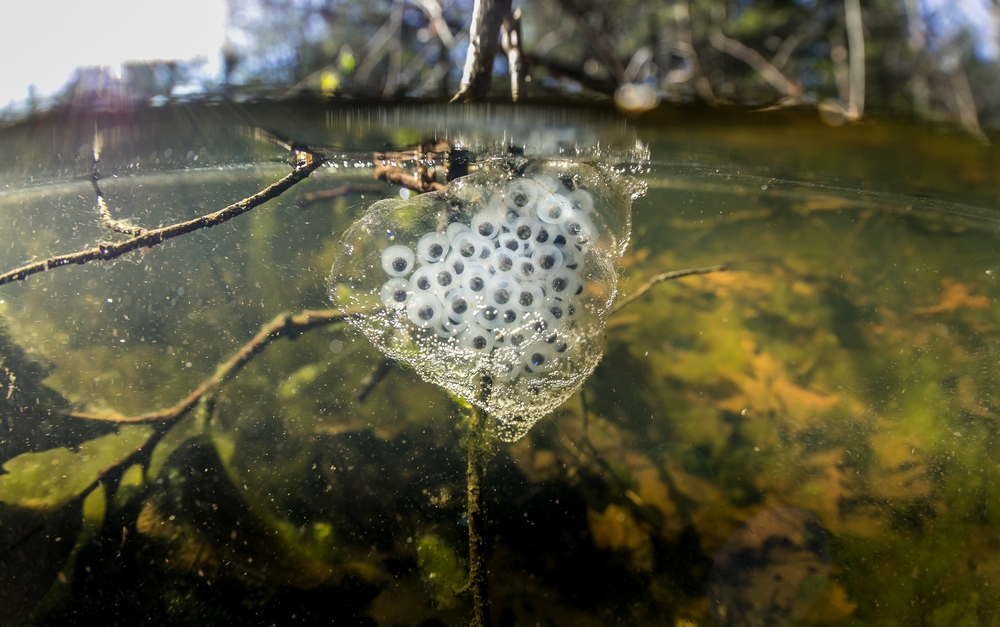
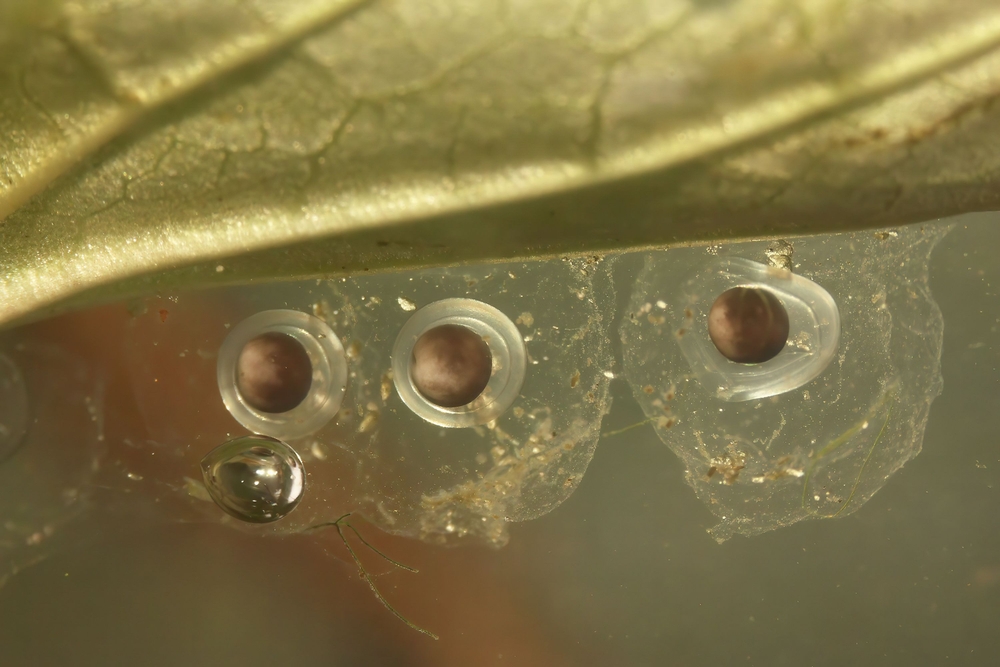
Salamander eggs do not have hard, waterproof shells like bird or reptile eggs. Instead, they are surrounded by protective jelly and must remain damp.
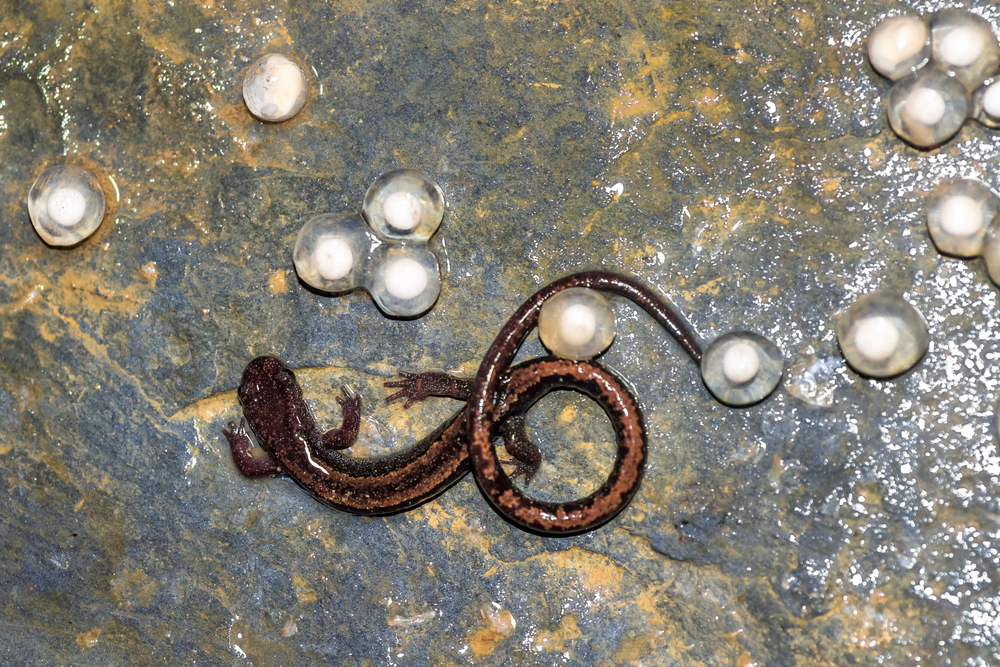
Depending on the species, a female might attach her eggs to underwater plants, hide them beneath a log or place them inside a damp underground chamber. Woodland salamanders often curl their bodies around their eggs to protect them from predators, mould and drying out.
Some salamanders return to the same ponds in which they hatched. On damp spring nights, large numbers may travel across the forest floor towards their breeding pools. This journey can be dangerous if roads cut through their habitat.
Life as a Salamander Larva
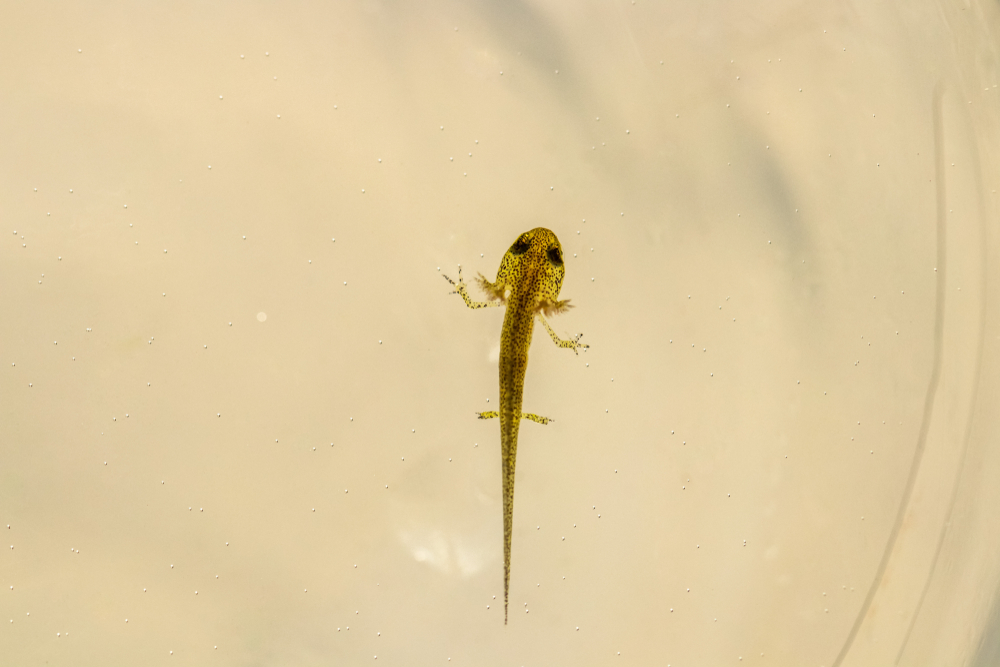
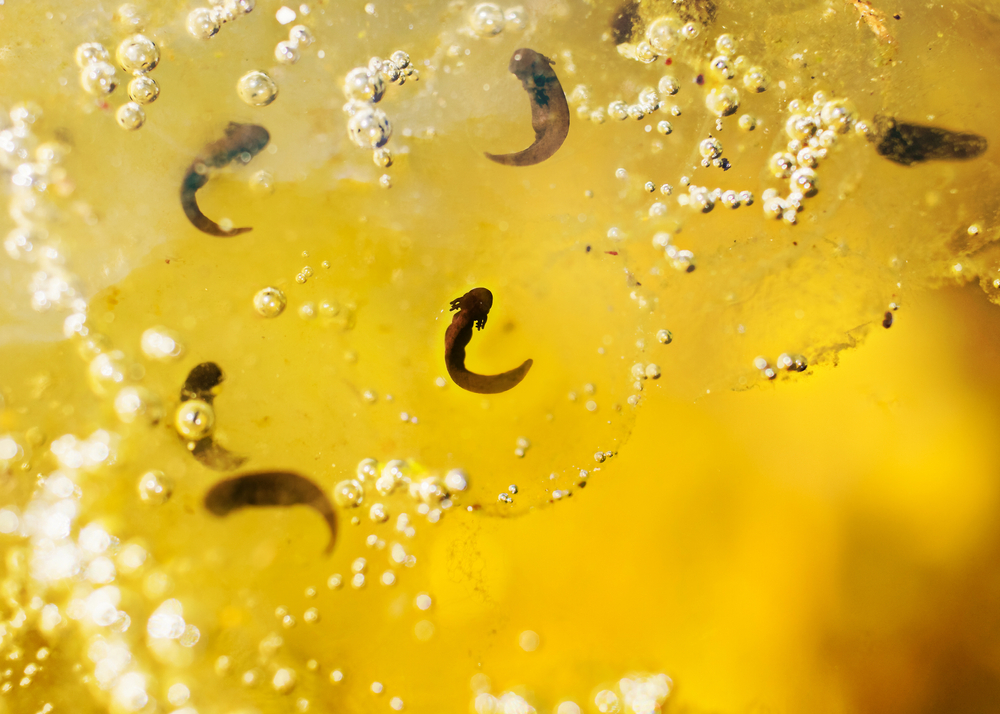
Many salamanders begin life in water. When their eggs hatch, the larvae look a little like tadpoles—but there are some important differences.
Salamander larvae have long bodies, tails and delicate external gills that resemble colourful feathers. These gills take oxygen from the surrounding water. As the larvae grow, they develop legs and begin hunting tiny aquatic animals.
Eventually, most undergo metamorphosis. Their bodies change, their gills disappear and they become better suited to life on land. After leaving the water, the young salamanders hide in cool, damp places where their sensitive skin will not dry out.
The Salamanders That Skip the Pond
Not every salamander has a free-swimming larval stage.
Many lungless salamanders lay their eggs in damp places on land. The young complete their early development inside the egg and hatch as tiny, fully formed salamanders. This is called direct development.
Direct development allows these species to reproduce far away from ponds and streams. However, their eggs still need a humid hiding place beneath soil, moss, rocks or rotting wood.
Salamanders Born Alive
A small number of salamanders take an even more surprising approach.
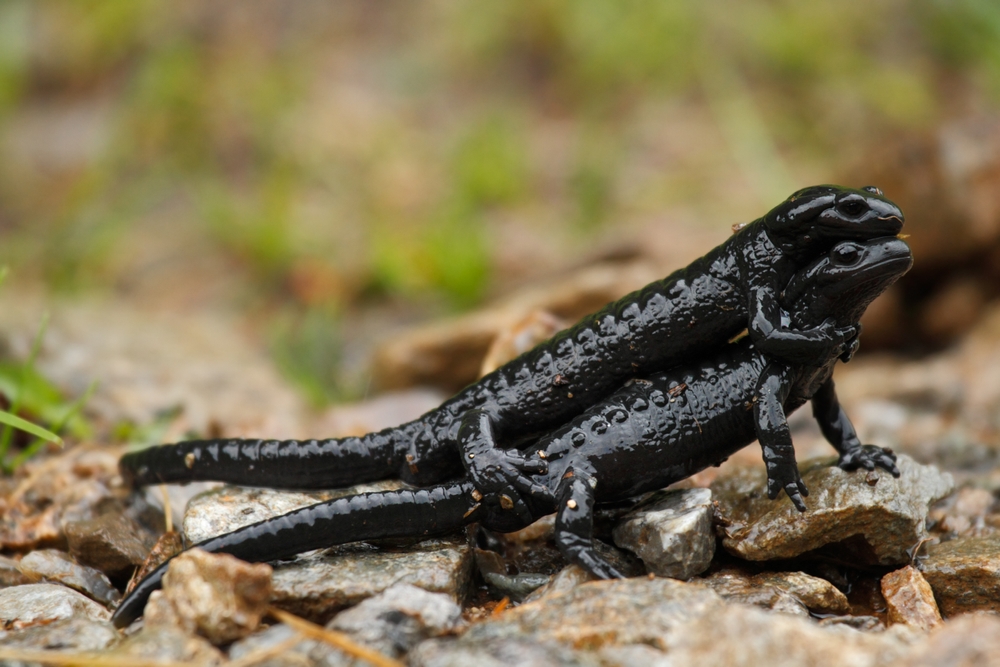
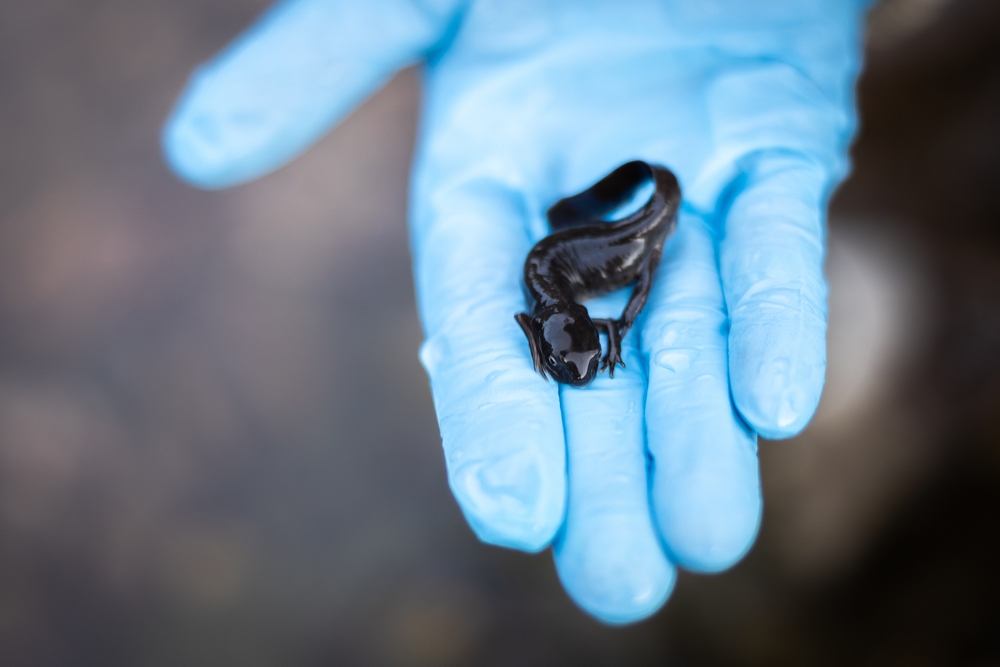
Female fire salamanders usually keep their developing young inside their bodies before releasing live larvae into shallow water. Alpine salamanders go one step further: they give birth to a small number of fully developed young that are ready for life on land.
This is helpful in cold mountain habitats where suitable breeding ponds can be difficult to find.
The Salamander That Never Grows Up
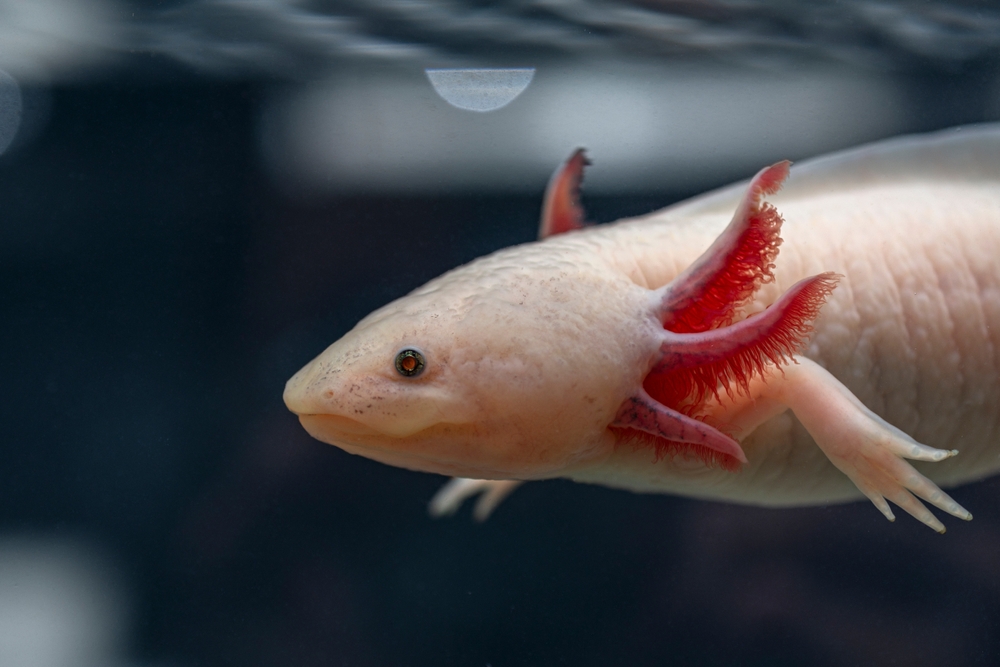
Axolotls follow another extraordinary path. They hatch as aquatic larvae with feathery gills—but instead of losing those gills during metamorphosis, they normally keep them throughout adulthood.
Even though an adult axolotl still looks like an oversized larva, it can reproduce and lay eggs. Keeping youthful features as an adult is known as paedomorphosis.
Axolotls are not the only salamanders capable of this. Several other aquatic species can also become adults without completing the usual transformation into a land-dwelling form.
Super Salamander Parents
Many young salamanders receive no care after hatching, but some species are remarkably attentive parents.
Female woodland salamanders may guard their eggs for weeks. They protect the clutch, remove unhealthy eggs and help prevent fungal growth.
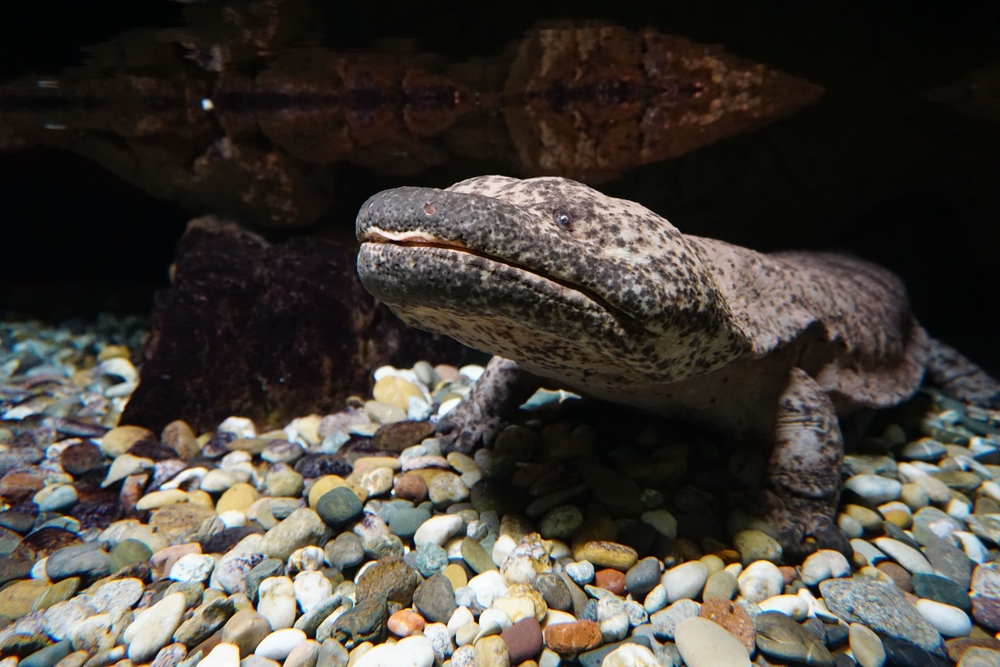
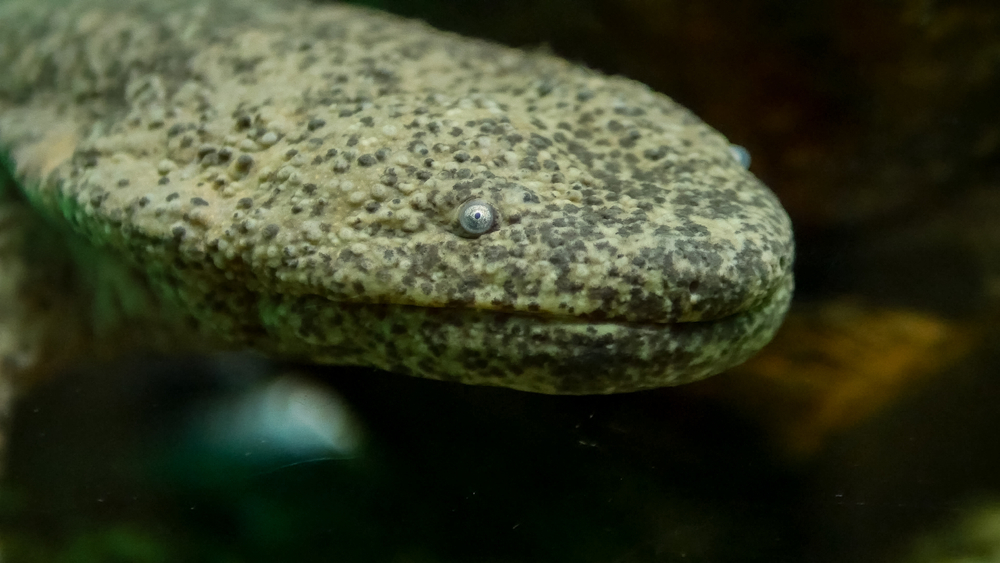
Japanese giant salamander fathers are especially devoted. A large male, known as a den-master, guards an underwater nest containing hundreds of eggs. He moves and fans them with his tail, helping fresh, oxygen-rich water flow over the developing embryos. He may even remove unhealthy eggs before mould can spread to the rest of the clutch. These behaviours have been documented in a peer-reviewed study of Japanese giant salamander parental care.
Why So Many Different Methods?
Salamanders live in an enormous range of habitats, from mountain streams and woodland ponds to caves and tropical forests. There is no single reproductive strategy that works everywhere.
Aquatic larvae can find plenty of tiny prey in a pond, but they may be threatened if the water dries up. Eggs laid on land avoid hungry fish, but they must be protected from dehydration. Live birth produces fewer young, yet gives each baby more time to develop safely.
Every method is a different solution to the same challenge: giving the next generation the best possible start.
Salamander Reproduction: Quick Facts
- Most salamanders lay jelly-covered eggs.
- Many species transfer sperm using a package called a spermatophore.
- Aquatic larvae breathe using feathery external gills.
- Some young undergo metamorphosis before moving onto land.
- Direct-developing species hatch as miniature salamanders.
- Fire and Alpine salamanders can produce live young.
- Axolotls normally keep their larval gills throughout adulthood.
- Some salamander parents carefully guard and clean their eggs.
From underwater nurseries to babies born on mountaintops, salamanders have developed some of the most varied reproductive strategies of any vertebrate. Their life cycles might sometimes seem strange—but each one is brilliantly suited to the habitat the salamander calls home.