
Mata Mata (Chelus fimbriata)
Animal group: Reptile
Family: Chelidae
Shell length: Up to approximately 45 cm
Weight: Up to 17 kg
Diet: Fish and aquatic invertebrates
Habitat: Shallow streams, swamps, marshes and muddy pools
Distribution: The Amazon Basin and eastern Guianas in South America
Conservation status: Not currently assessed by the IUCN
Disguised as Dead Leaves
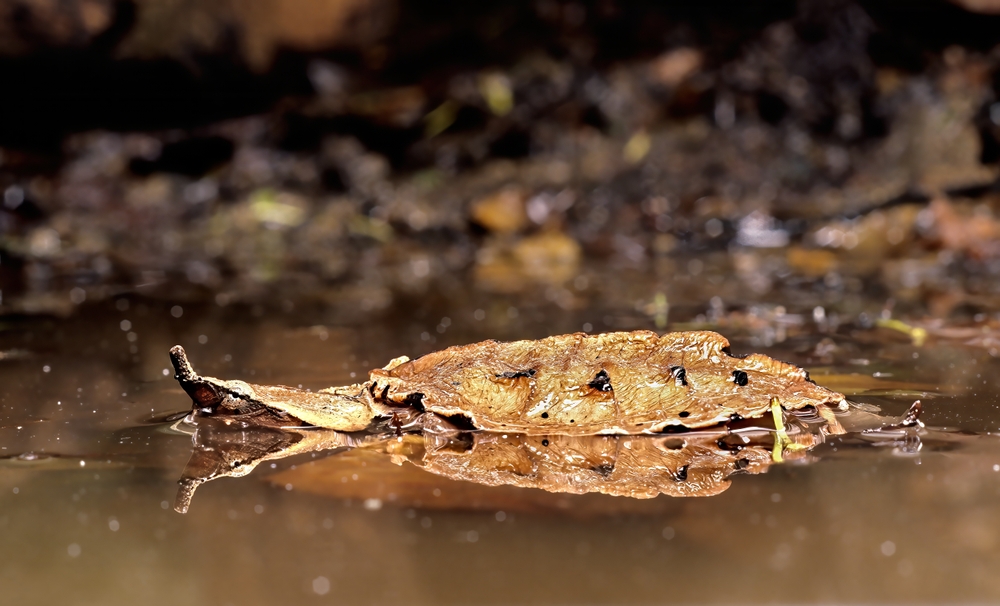
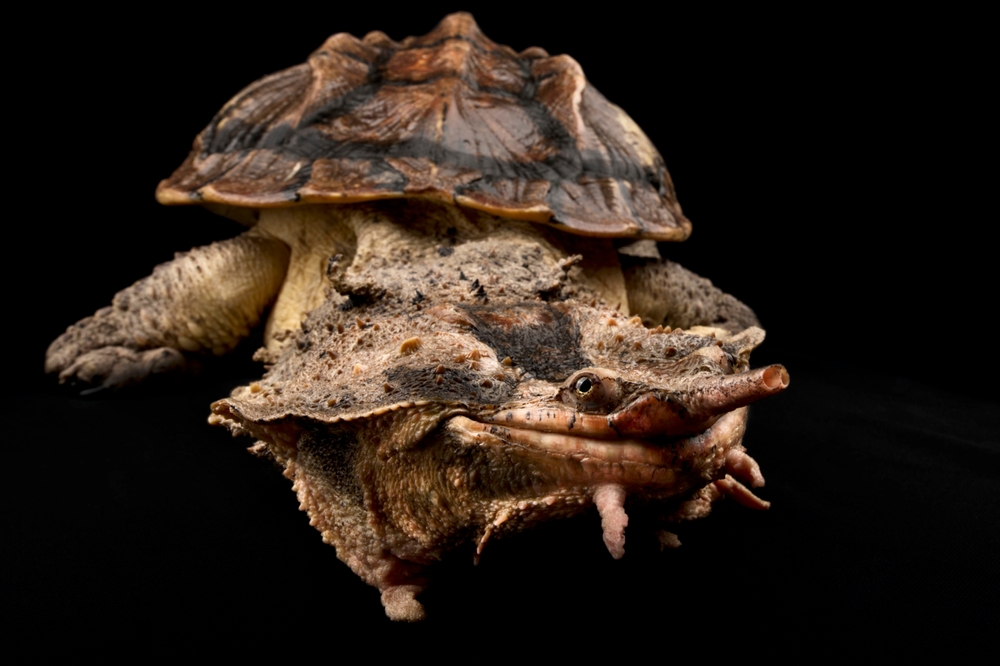
The mata mata’s rough shell resembles a piece of bark, while its flattened head and ragged skin flaps look like dead leaves. This excellent camouflage allows the turtle to remain almost invisible among plants and debris on the riverbed.
Its long, tubular snout works like a snorkel, allowing it to breathe at the surface without moving the rest of its body.
An Underwater Vacuum
Rather than chasing its prey, the mata mata waits motionless for a fish to swim close. It suddenly opens its enormous mouth, creating powerful suction that pulls the fish and surrounding water inside. The turtle cannot chew, so it swallows its prey whole.
Did You Know?
The mata mata is a side-necked turtle. Instead of pulling its head directly backwards into its shell, it bends its long neck sideways. In 2020, scientists discovered that Orinoco mata matas belong to a separate species, Chelus orinocensis. Smithsonian’s National Zoo, Senckenberg Research Institute